
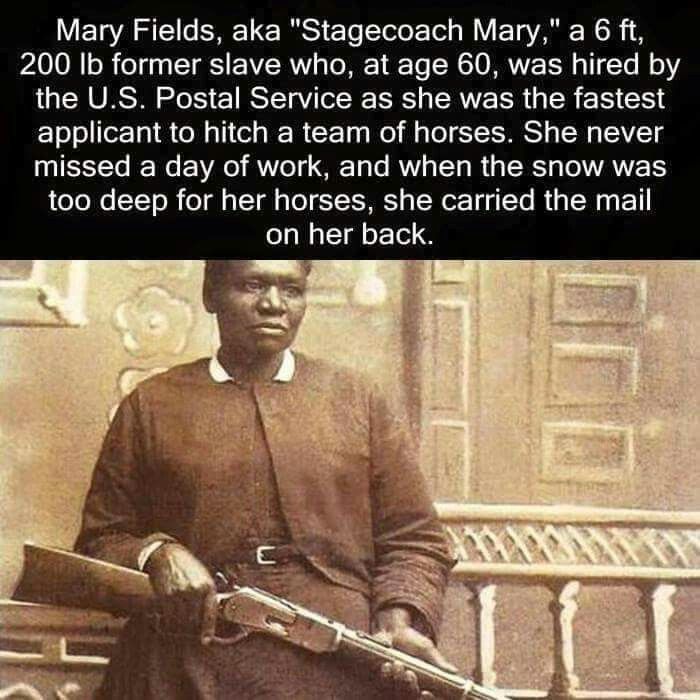
Bandits beware: In 1890s Montana, would-be mail thieves didn’t stand a chance against Stagecoach Mary. The hard-drinking, quick-shooting mail carrier sported two guns, men’s clothing and a bad attitude. As the first African American woman to carry mail, she stood out on the trail—and became a Wild West legend. Rumor had it that she’d fended off an angry pack of wolves with her rifle, had “the temperament of a grizzly bear,” and was not above a gunfight. But how much of Stagecoach Mary’s story is myth?
Born Mary Fields in around 1832, Fields was born into slavery, and like many other enslaved people, her exact date of birth is not known. Even the place of her birth is questionable, though historians have pinpointed Hickman County, Tennessee as the most likely location. At the time, enslaved people were treated like pieces of a property; their numbers were recorded in record books, their names were not.
Her story becomes clearer after the end of the Civil War, when she was freed. Many formerly enslaved people headed north to friendlier territory. So did Fields, who seems to have gone up the Mississippi River working on riverboats and acting as a servant and laundress for families along the way. She ended up in Ohio, living a life that was well outside the norm—in a convent.
It’s not clear how Fields discovered the Ursuline Convent of the Sacred Heart in Toledo, Ohio. Some accounts say she accompanied a daughter of the Warner family to the convent. Others say she headed there with a family friend who was a nun.
The religious community, which still exists today, was serene and disciplined. There, Fields worked as a groundskeeper. Her gruff style and penchant for cursing raised eyebrows in the quiet convent. When asked how her journey to Toledo was, she reportedly told one of the nuns that she was ready for “a good cigar and a drink.” Historical records show that the nuns complained about her volatile temper and her “difficult” nature.
According to historian Dee Garceau-Hagen, one nun remembered Fields’ wrath when anyone disturbed her lovingly kept grounds, saying “God help anyone who walked on the lawn after Mary had cut it.” Fields also tussled with the nuns over her wages—behavior that would have shocked white women who expected African Americans to be well behaved and subservient.
 The Gamutt Blog