Tag Archives: Black History Month Moment

#BlackHistoryMonth Moment: #MaryBeatriceKenner invented the 1st feminine sanitary belt! [details]

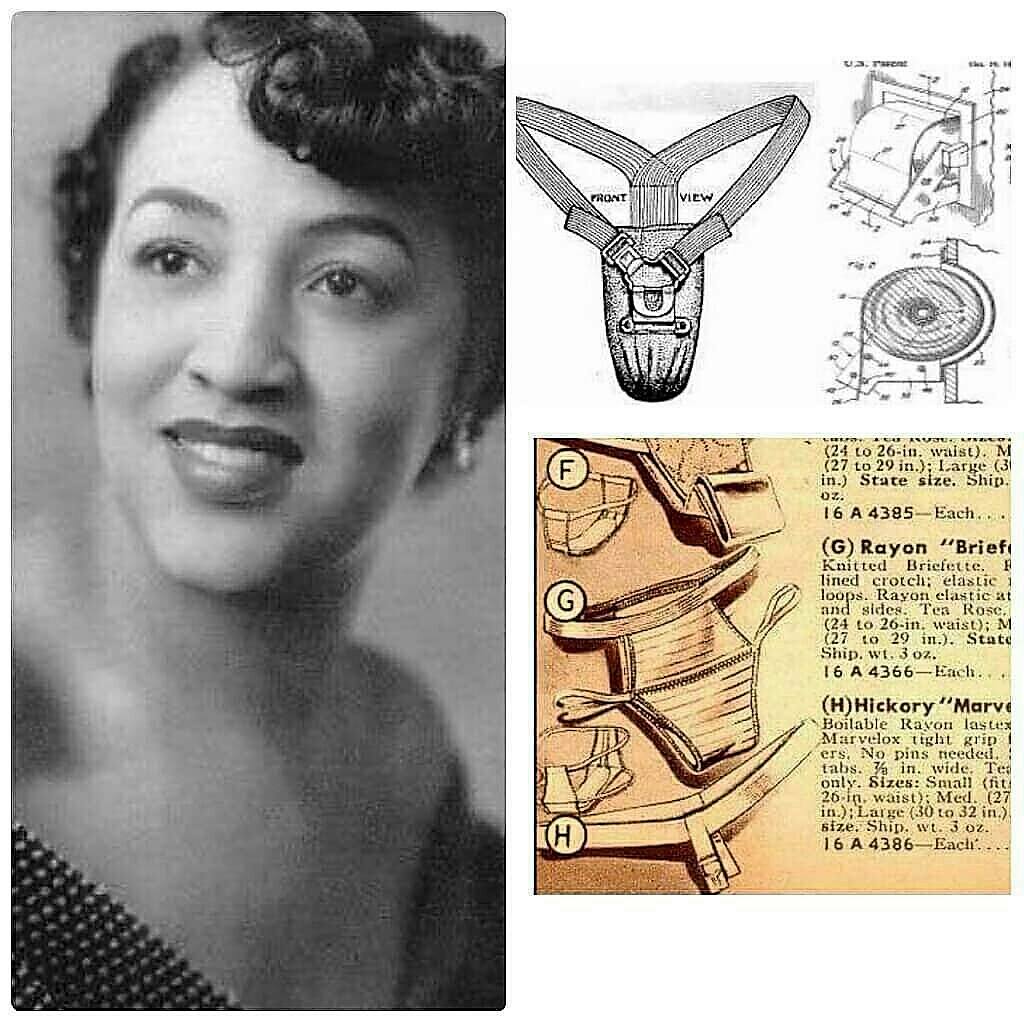
As part of Black History Month we want to celebrate the African-American self-taught inventor and period pioneer Mary Beatrice Davidson Kenner.

Kenner, who at the age of 44, in the mid-1950s, invented the world’s first adjustable sanitary belt to keep sanitary pads in place. 

Continue reading #BlackHistoryMonth Moment: #MaryBeatriceKenner invented the 1st feminine sanitary belt! [details]

#BlackHistoryMonth Moment: #JackLCooper- 1st Black radio DJ/announcer! [Details]

Jack L. Cooper is widely acknowledged as the first African American radio broadcaster. Cooper, born in Memphis, Tennessee on September 18, 1888, was the youngest of 10 children.

Continue reading #BlackHistoryMonth Moment: #JackLCooper- 1st Black radio DJ/announcer! [Details]

#BlackHistoryMonth Moment: #BessieColeman: 1st Black woman to earn an International pilot’s license! [details]

During Black History Month, we honor trailblazers like Bessie Coleman, who refused to let barriers keep her grounded.

✈️
💫

Bessie Coleman defied the odds, becoming the first Black woman to earn an international pilot’s license in 1921. When flight schools in the U.S. denied her entry due to discrimination, she took her dreams to France and made history. Returning home, she wowed crowds as a daring stunt pilot, inspiring generations to chase their ambitions fearlessly.

Bessie Coleman was born in Waxahachie, Texas in 1892. Her mother was of African ancestry and her father was of African and Native American ancestry.

Due to discrimination in the United States, however, she went to France to attend an aviation school to become a pilot. In 1921, she became the first American woman to obtain an international pilot’s license.

Coleman came back to the United States and became a stunt pilot. She also raised money to start a school to train African American aviators, hoping to afford them opportunities that were not then available in the U.S.

“Well, because I knew we had no aviators, neither men nor women, and I knew the Race needed to be represented along this racist important line, so I thought it my duty to risk my life to learn aviating and to encourage flying among men and women of the Race who are so far behind the white men in this special line, I made up my mind to try. I tried and was successful.” – Bessie Coleman, Excerpt from “Aviatrix Must Sign Life Away to Learn Trade,” Chicago Defender, October 8, 1921

Coleman was killed in 1926 during an aerial show rehearsal. Her barrier-breaking life, determination, and impressive career accomplishments continue to provide inspiration for others to this day.

#BlackHistoryMoment: #MichaelJackson was the 1st BLACK artist to be RIAA DIAMOND certified for an album! [details]

#MichaelJackson was the first Black artist to be #RIAA💎 certified for #Thriller in 1984. Today, and is also on display at National Museum of African American Music. #BlackHistoryMonth.

Continue reading #BlackHistoryMoment: #MichaelJackson was the 1st BLACK artist to be RIAA DIAMOND certified for an album! [details]

#BlackHistoryMonth Moment: #CharlesRichardPatterson-1st Black-owned car company–before #Ford! [details]

Before Ford, there was a car company in Ohio building automobiles by hand.

In 1915, that company produced the Patterson-Greenfield automobile.

Charles Richard Patterson was born in Virginia in 1833. By the mid-1800s, he had made his way to Greenfield, Ohio, where he mastered the highly skilled trade of carriage building. This was not simple labor. It required engineering, woodworking, metalwork, upholstery, and mechanical design. By the late 19th century, C.R. Patterson and Sons was producing luxury horse-drawn vehicles and operating with a racially integrated workforce at a time when segregation was the norm.

By the late 19th century, the United States had been fully ushered into a period of dramatic industrial and economic growth commonly known as the Gilded Age. Subsequently, at the turn of the century, the advent of purpose-built, single cylinder, self-propelled automobiles further revolutionized the coach and carriage manufacturing industries. Although emerging robber barons or “Captains of Industry”; dominated the economy through monopolies, smaller independent companies also saw opportunities to put themselves on the map, one such company, C.R. Patterson and Sons, would go on to become an early pioneer for independent car manufacturers and a trailblazer for black entrepreneurs.

Born into slavery on a Virginia plantation in 1833, Charles Richard Patterson or C.R. Patterson fled north to Greenfield, Ohio with his loved ones in the 1850s where he established himself as a blacksmith. Shortly after working as a foreman for the Dines and Simpson Carriage and Coach Makers Company, Patterson partnered with a white carriage manufacturer, J.P. Lowe, forming J.P. Lowe & Company in 1873. Charles Richard Patterson quickly became a high- profile and well-respected resident in Greenfield. Patterson, in addition to working as a foreman where he developed a reputation for overseeing the production of high-quality products, was also a trustee of the Greenfield African Methodist Episcopal Church in 1880, where he also taught Sunday school. When his son was denied admission to an all-white secondary school in the area, he filed a lawsuit against the local Board of Education, a case which he won. By 1888 the company had attracted 10 workers, a sizeable number for small businesses at the time. However, despite the company’s notable success, in January 1893, the overextension and failure of some of the country’s largest companies such as the Philadelphia and Reading Railroad Co. ignited a panic and ensuing economic crisis. Commonly known as the Panic of 1893, the depression lasted four years and saw stock prices plummet and unemployment skyrocket across the country reaching as high as 25 percent. Patterson, seeking to start his own company, used the opportunity to buy out Lowe’s shares and became the sole proprietor of the company, renaming it C.R. Patterson and Sons, an act virtually unheard of at the time for a Black man. Patterson ran a successful business producing 28 different horse-drawn carriage styles and approximately 500 horse-drawn carriages per year as well as employed an integrated workforce of 35-50 craftsmen.

Following his death in 1910, Charles’s son, Frederick Douglas Patterson inherited his father’s carriage business. In addition to graduating top of his class in high school and being the first black athlete to play football for Ohio State University, Frederick Douglas Patterson was also the vice president of the National Negro Business League. The organization, founded by Booker T. Washington in 1900, was designed to generate economic growth and autonomy within the Black community. Frederick, utilizing his entrepreneurial disposition, quickly recognized the potential and growing popularity of horseless carriages and produced the company’s first automobile in 1915. Following the production of the Patterson-Greenfield Automobile, he became the first and only Black owner and operator of an automobile Company. Frederick said of the Patterson- Greenfield Automobile: “It is not intended for a large car. It is designed to take the place originally held by the family surrey. It is a 5-passenger vehicle, ample and luxurious.” The Company offered several models of coupes and sedans including a state-of-the-art 4-cylinder 30 hp Continental “Red Devil” speedster. The company was well respected and saw considerable success but failed to keep up with Ford’s assembly line manufacturing capacity at the turn of the century. By the 1920s, the company shifted its efforts towards designing truck and bus chassis made by other manufacturers such as Ford and General Motors. The company was renamed Greenfield Bus Body Company following Frederick’s death In 1932 but, due to the crippling effects of the Great Depression, the independent auto manufacturer was ultimately forced to close production in 1939.[Source]

#BlackHistoryMonth Moment: #JohnAlbertBurr PERFECTED the lawn mower! [Details]

If you have a manual push mower today, it likely uses design elements from 19th Century Black American inventor John Albert Burr’s patented rotary blade lawn mower.

Continue reading #BlackHistoryMonth Moment: #JohnAlbertBurr PERFECTED the lawn mower! [Details]

#BlackHistoryMonth Moment: #LucyTerryPrince-the 1st African-American Poet! [details]

Lucy Terry Prince

Lucy Terry Prince died in 1821. Her obituary appeared in the August 14, 1821 issue of the Vermont Gazette newspaper. The author wrote that she was a “remarkable woman” with rare qualities. At that time, newspaper obituaries were usually short. Lucy Terry Prince’s obituary was long and said many good things about her intelligence and talents. This was unusual for two reasons: she was a woman, and she was Black.

In the 1800s, society thought that white men were more important than Black people and women. What did Lucy Terry Prince do in her lifetime to be called a remarkable woman in the newspaper?

White slave traders kidnapped Lucy Terry as a baby from Africa in the 1730s. She lived as an enslaved person in Rhode Island and Deerfield, Massachusetts.

Lucy Terry is credited as the author of the of the first poem composed by an African American woman, Lucy Terry Prince was a remarkable woman whose many accomplishments included arguing a case before the Supreme Court. Lucy was stolen from Africa as an infant and sold to Ebenezer Wells of Deerfield, Massachusetts.

Lucy Terry Prince died in 1821. Her obituary appeared in the August 14, 1821 issue of the Vermont Gazette newspaper. The author wrote that she was a “remarkable woman” with rare qualities. At that time, newspaper obituaries were usually short. Lucy Terry Prince’s obituary was long and said many good things about her intelligence and talents. This was unusual for two reasons: she was a woman, and she was Black.

In the 1800s, society thought that white men were more important than Black people and women. What did Lucy Terry Prince do in her lifetime to be called a remarkable woman in the newspaper?

White slave traders kidnapped Lucy Terry as a baby from Africa in the 1730s. She lived as an enslaved person in Rhode Island and Deerfield, Massachusetts.

In Massachusetts, several community members and friends died in a French-led Abenaki raid in 1746. Lucy Terry created a poem about the raid. This poem, called The Bars Fight, was meant to be shared out loud. It was published about 100 years later. This poem made Lucy Terry America’s first published African American poet. Terry was well known for being intelligent and gifted with language.

Lucy Terry married a Black man named Abijah Prince around 1750. He was no longer enslaved and helped Lucy Terry Prince gain her freedom. Together, they had six children. The family moved to farmland in Guilford, Vermont, in 1775.

In Guilford, the Princes had racist neighbors. The neighbors tore down their fences and destroyed their crops. Lucy Terry Prince argued her family’s case before the Governor of Vermont in 1785. She impressed the Council with her skilled speech and “captivated all around her.”

The Prince family won their case, but that did not stop the abuse. Later, a mob led by the neighbor burned the Prince’s hay and harmed their farmhand. Vermont courts found the mob guilty. But the damage to the farm was already done. After her husband’s death in 1794, Lucy Terry Prince left Guilford.

Prince and some of her children moved to Sunderland, Vermont. Her husband bought land there many years earlier. To claim the land, they argued in the Vermont Supreme Court and won. In Prince’s old age, many would visit her home to hear her speak and share stories. When she died in 1821, she was a well-loved and respected member of the Sunderland community.

The following obituary was published for Prince on Tuesday, August 21, 1821, in the Greenfield, Massachusetts, paper The Frankylin Herald:

At Sunderland, Vt., July 11th, Mrs. Lucy Prince, a woman of colour. From the church and town records where she formerly resided, we learn that she was brought from Bristol, Rhode Island, to Deerfield, Mass. when she was four years old, by Mr. Ebenezer Wells: that she was 97 years of age—that she was early devoted to God in Baptism: that she united with the church in Deerfield in 1744—Was married to Abijah Prince, May 17th, 1756, by Elijah Williams, Esq. and that she had been the mother of six children. In this remarkable woman there was an assemblage of qualities rarely to be found among her sex. Her volubility was exceeded by none, and in general, the fluency of her speech was not destitute of instruction and education. She was much respected among her acquaintances, who treated her with deference.[16]

The Prince family was remembered in Guilford for many decades after their death. 

Black History Month Moment: #StagecoachMary ‘Mary Fields’ [details]

Bandits beware: In 1890s Montana, would-be mail thieves didn’t stand a chance against Stagecoach Mary. The hard-drinking, quick-shooting mail carrier sported two guns, men’s clothing and a bad attitude. As the first African American woman to carry mail, she stood out on the trail—and became a Wild West legend. Rumor had it that she’d fended off an angry pack of wolves with her rifle, had “the temperament of a grizzly bear,” and was not above a gunfight. But how much of Stagecoach Mary’s story is myth?

Continue reading Black History Month Moment: #StagecoachMary ‘Mary Fields’ [details]

#BlackHistoryMonth Moment: #GarrettMorgan and his MANY INVENTIONS!! [details]

The gas mask – Invented by Garrett Morgan in 1912, the gas mask saved thousands of soldiers’ lives during World War I, when poisonous gas was first used as a weapon. If that weren’t enough, he also invented the modern traffic signal.

Continue reading #BlackHistoryMonth Moment: #GarrettMorgan and his MANY INVENTIONS!! [details]

#BlackHistoryMonth Moment: #AlexanderMiles PERFECTED the modern-day elevator! [details]

Black History is EVERYBODY’S history!!

Alexander Miles was an African-American inventor who was best known for being awarded a patent for an automatically opening and closing elevator door design in 1887. Contrary to many sources, Miles was not the original inventor of this device. In 1874, 13 years before Miles’ patent was awarded, John W. Meaker was awarded U.S. Patent 147,853 for the invention of the first automatic elevator door system.

Continue reading #BlackHistoryMonth Moment: #AlexanderMiles PERFECTED the modern-day elevator! [details]